Pinky Pradeep Khatri, Au.D.
The High Cost of Bluffing: Understanding Listening Fatigue and Hearing Loss

It's a scene that plays out in countless homes every evening: you're sitting at a dinner table, surrounded by the people you love, yet you feel completely isolated.
Voices blur together, laughter erupts, and instead of asking for clarification, you simply nod, smile, and pretend you caught the joke.
Here at Family Hearing Services, I see this behavior constantly; it's known as the "dinner table syndrome," which leaves you physically present but mentally miles away.
If you find yourself checking out of conversations, please know that this is not a character flaw. It is a physiological survival mechanism.
Long before I became an audiologist, I knew exactly what it felt like to struggle with listening. Growing up, I had auditory processing difficulties at a time when there was very little awareness around them.
School was hard. Group conversations were even harder. When there was background noise, fast-moving information, or too many people talking at once, my brain would eventually hit its limit. From the outside, it may have looked like I was not paying attention.
But the truth was, I was overloaded. I was not lazy, disinterested, or trying to be difficult. I was simply working harder than people realized just to keep up.
Because listening was so exhausting, I learned how to hide in plain sight. I learned how to stay quiet, avoid drawing attention to myself, and look like I was fine, even when I was struggling inside.
Over time, the negative messages I heard from others, like “Why aren’t you listening? Pay attention!” turned into quieter, painful inner questions: “Maybe I’m not good enough.” “Maybe I should just stay quiet.”
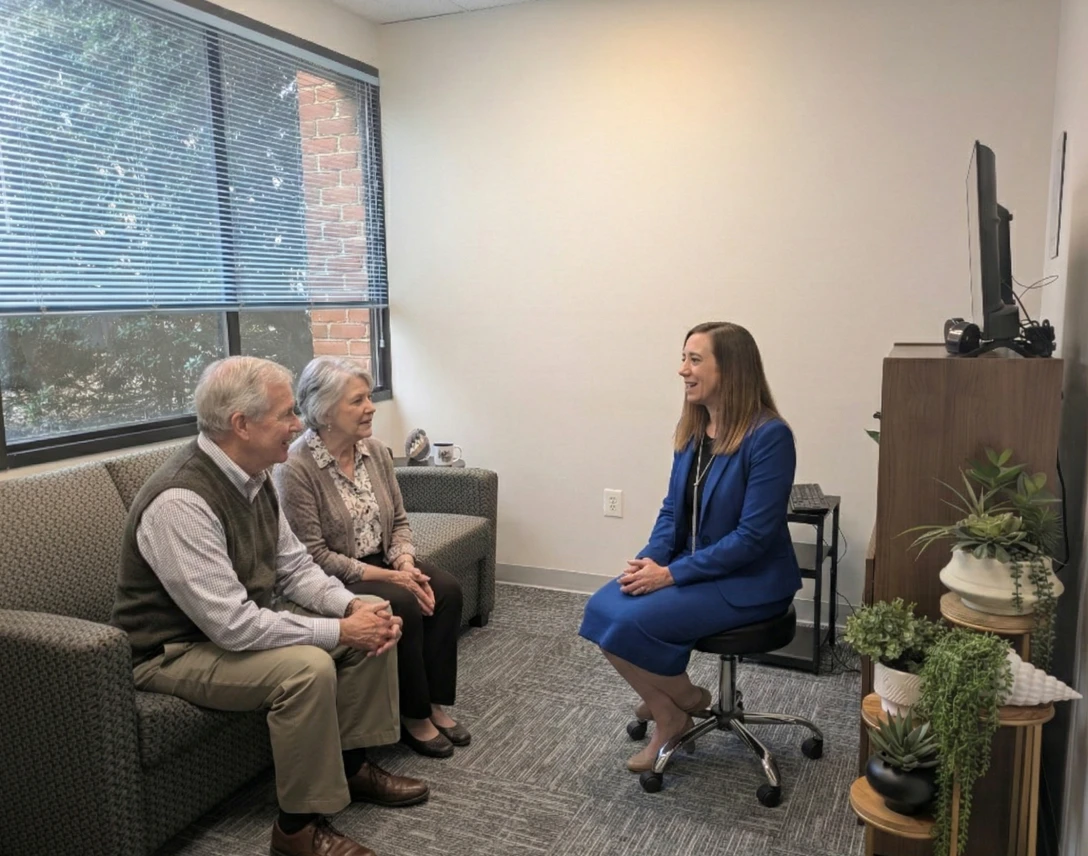
Every fourth Friday of the month, I host our Hearing with Confidence seminar to address these exact hurdles directly with my patients. Communication is a bridge between two people. For those living with untreated auditory challenges, that bridge is under constant, exhausting repair.
By understanding the neuroscience of this struggle, we can move away from the exhaustion of bluffing and step into transformative hearing.
The Neuroscience of the High-Speed Relay
Hearing is a passive, mechanical process where your ears pick up sound waves. Listening, however, is an active cognitive function that requires significant brainpower.
When you experience hearing loss or auditory processing challenges, your ears pass incomplete audio cues to your brain, forcing your mind to work overtime to fill in the missing blanks. This creates a high-speed relay race across your neural pathways:
The Auditory Cortex: First, your auditory cortex picks up the messy, raw sound data.
The Prefrontal Cortex: Next, your prefrontal cortex goes into overdrive, desperately sorting through context clues and memories to translate the garbled sound into words.
The Amygdala: Finally, when the cognitive load becomes too heavy, your amygdala triggers a mild fight-or-flight response.
This neurological overload is the direct root of irritability, headaches, and that sudden, overwhelming urge to withdraw from social settings.
Later, after becoming an audiologist and helping patients, I began seeing my childhood pattern repeat itself in a different form. Patients would come in hoping that hearing aids would solve everything.
And yes, hearing technology can be life-changing; hearing aids are powerful tools. But many people would still tell me, "I can hear, but I still struggle to understand," or "I avoid group conversations because it takes too much energy."
That is when I realized something vital: The struggle is not just about sound. It’s about effort, confidence, identity, and the fear of being misunderstood.
Many people don’t stop participating because they don’t care. They stop because listening has become exhausting. They withdraw because communication has started to feel unsafe.
The 4 Levels of Hearing: Moving Beyond Data
Hearing exists on a spectrum of human connection that goes far deeper than just decoding spoken words.
During my presentation, I break down the four distinct levels of auditory processing:
Level 1: Physical Connection – Your ears detect the raw presence of sound waves and vocal frequencies, even if the words themselves are not clear.
Level 2: Intellectual Connection – You use pure brainpower to process data and decode words. This is the "bluffing zone" where the exhaustion of guessing occurs.
Level 3: Emotional Connection – Your brain interprets vocal inflections, subtle tones, and true intuition. You are feeling what the speaker means.
Level 4: Transformative Connection – By utilizing empathy, you achieve deep peace, mutual understanding, and total presence in your relationships.
Shifting up into the deeper emotional layers requires a change in strategy. Instead of focusing entirely on a frantic, exhausting fight for data, moving forward relies on utilizing empathy as a tool to keep the communication channel open.
Hearing care must go beyond hearing aids. Technology supports access to sound, but we also need support rebuilding confidence and retraining the brain.
DEFEAT the Barriers
Because hearing loss and auditory processing difficulties are invisible, when people miss parts of a conversation, they can be mislabeled as rude, distracted, or forgetful. But that is not the truth.
The truth is, their brain is working hard, their system is tired, and their confidence has been worn down. I know that feeling all too well.
When communication begins to strain, both well-meaning loved ones and individuals experiencing hearing loss tend to fall into destructive, automatic patterns.
The DEFEAT scripts are the internal and external reactions that lead directly to isolation:
Dismissing your own needs.
Excluding yourself from gatherings.
Faulting others for your struggle.
Echoing shame internally.
Attacking out of frustration.
Terminating the conversation entirely.
These negative internal scripts turn a physical sensory struggle into a painful identity, making you feel like a burden or an outsider in your own life. You don’t need judgment; you need understanding and strategies.
Rebuilding the Bridge: Actionable Tools
Fortunately, you can retrain your habits to rebuild your communication pathways. Practice these two concrete tools at home to combat listening fatigue and quiet a racing mind.
Tool 1: The "I See You" Statement
This simple verbal formula lowers defense mechanisms and rewires your interactions toward positivity by validating the effort being made on both sides of the bridge.
For years, I studied and practiced mindful listening techniques, and I realized I had spent years listening to old, negative stories about myself. So, I began practicing this tool internally.
I would tell myself: "I see that I became a successful professional, entrepreneur, and author despite growing up with auditory processing difficulties. This shows me that I am resilient." Confidence begins by changing how we speak to ourselves.
I see ____________________(action) and this shows me __________________ (quality)
For Self-Compassion: "I see that I'm wearing my hearing aids consistently; this shows me I am committed to hearing better."
For Your Partner: "I see that you're repeating yourself to help me understand, and this shows me you are making an effort to connect with me."
Tool 2: The "LINK" Process
When background noise increases, use this step-by-step process to ground yourself and stay present in the room:
Listen with mindful presence, focusing entirely on the speaker's face.
Identify the underlying emotion behind their words.
Notice any physical actions or environmental barriers, like a loud television.
Keep the link alive by acknowledging both the feeling and the barrier aloud ("I want to hear you, but the fan is making it difficult.").
Two Builders, One Bridge
Moving past listening fatigue is not a solitary journey; true communication is a shared responsibility. It requires intentional, compassionate effort from both the speaker and the listener to maintain a strong connection.
That is exactly why I created the Hear With Confidence Mastery program. Not just to help people hear better, but to help individuals and families understand what is really happening in communication, reduce fatigue, and move from frustration back toward connection.
Because hearing is about more than sound: it’s about connection, dignity, and feeling like yourself again.
If hearing aids have helped, but conversations still feel exhausting, I want you to know this: You are not failing. You are not broken, you are not difficult, and you are not alone. You may simply need a different kind of support.
While a decline in your hearing health certainly makes the communication more difficult, achieving a deep connection with the people you love is still entirely possible. I warmly invite you to join me at our next monthly seminar to learn more about managing your auditory wellness.
Reflect on your conversations today: which level of hearing are you stuck at? Try using one "I See You" statement tomorrow and see how it transforms your connection.
If you're ready to take the first step on your journey, join me for our upcoming Hearing with Confidence seminar by registering on our dedicated page today!

Pinky Pradeep Khatri, Au.D.
Expert Hearing Care in the DC Metro Area, with Locations in Chantilly and Leesburg.
Whether you have a question, need a second opinion, or want no-obligation advice from our trusted independent hearing doctors, simply complete this form, and we’ll get back to you shortly.